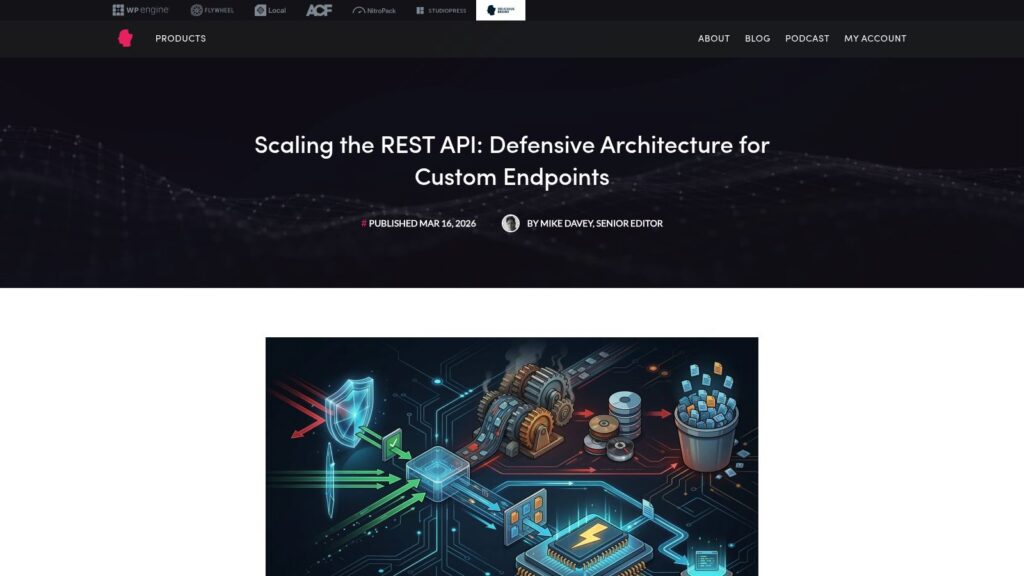
The article explains how to create high-performance custom WordPress REST API endpoints by designing lean responses using the _fields parameter, avoiding heavy queries like WP_Query when unnecessary, and implementing efficient caching with object caches such as Redis or Memcached. It also emphasizes securing endpoints with proper permission and input validation, plus protecting server resources via network-level defenses like Web Application Firewalls, DDoS protection, and rate limiting at the edge to prevent denial-of-service through excessive API requests.
Scaling the REST API: Defensive Architecture for Custom Endpoints