Building Custom WP-CLI Commands for Massive Data Migrations

The article explains how to build custom WP-CLI commands to perform massive data migrations in WordPress, avoiding browser timeouts and memory exhaustion by processing data in batches using PHP generators. It emphasizes managing the object cache carefully, employing SQL transactions for data safety, and using progress bars and dry-run options to maintain transparency and control during large updates.

https://deliciousbrains.com/building-custom-wp-cli-commands-for-massive-data-migrations/

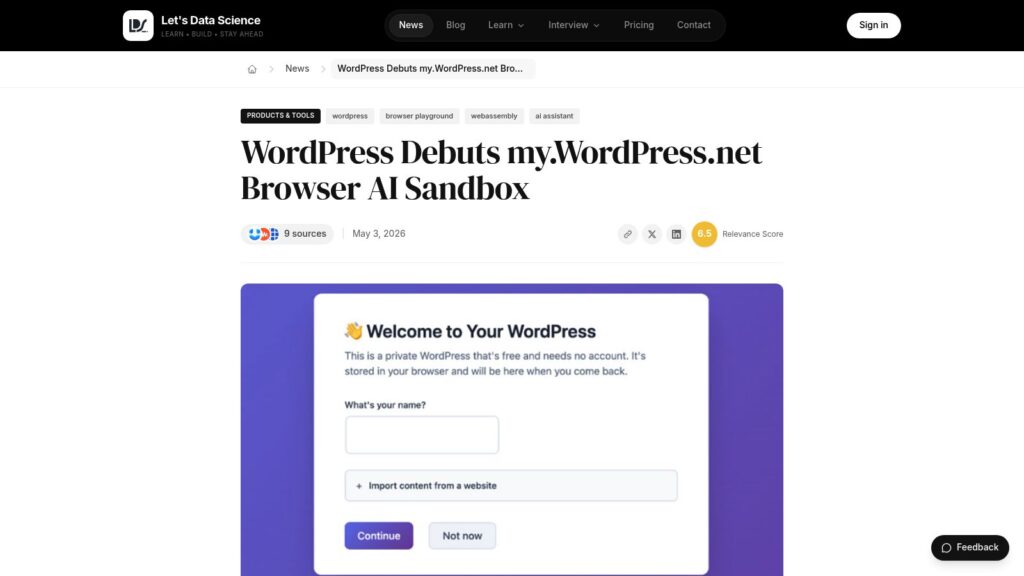
WordPress Debuts my.WordPress.net Browser AI Sandbox

WordPress has launched my.WordPress.net, a browser-based sandbox that runs a full WordPress instance client-side using WebAssembly, allowing users to create and manage isolated sites without hosting or server setup. This environment includes an integrated AI Assistant and app catalog, enabling content generation experiments with models like ChatGPT, and is designed to facilitate rapid prototyping and plugin testing with data stored locally in the browser.

https://letsdatascience.com/news/wordpress-debuts-mywordpressnet-browser-ai-sandbox-c73edab1

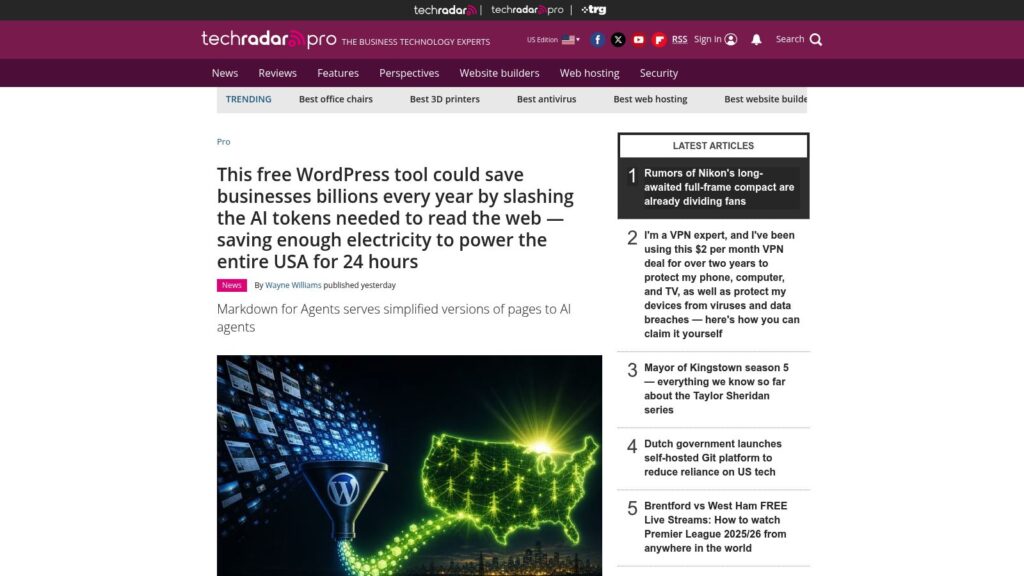
This Free WordPress Tool Could Save Businesses Billions Every Year by Slashing the AI Tokens Needed to Read the Web — Saving Enough Electricity to Power the Entire USA for 24 Hours

The Chancery Lane Project has released an open-source WordPress plugin called Markdown for Agents that serves simplified Markdown versions of webpages to AI agents, stripping out unnecessary scripts and layout code. This approach significantly reduces data transfer—by about 80% per page—and token usage for AI processing, potentially saving billions of gigabytes and cutting energy consumption equivalent to powering the entire USA for 24 hours annually if widely adopted across WordPress sites.

https://www.techradar.com/pro/this-free-wordpress-tool-could-save-businesses-billions-every-year-by-slashing-the-ai-tokens-needed-to-read-the-web-saving-enough-electricity-to-power-the-entire-usa-for-24-hours

Why Your WordPress Site Lost Traffic (& How to Get It Back)

The WPBeginner article explains common reasons why a WordPress site may experience a sudden drop in traffic, such as tracking errors, Google manual penalties, algorithm updates, or technical issues caused by recent site changes. It provides a step-by-step troubleshooting guide to identify the cause—including verifying analytics tracking, checking Google Search Console for penalties, auditing site settings, and scanning for malware—and offers actionable advice on how to recover and maintain healthy website traffic.

https://www.wpbeginner.com/wp-tutorials/why-your-wordpress-site-lost-traffic-and-how-to-get-it-back/

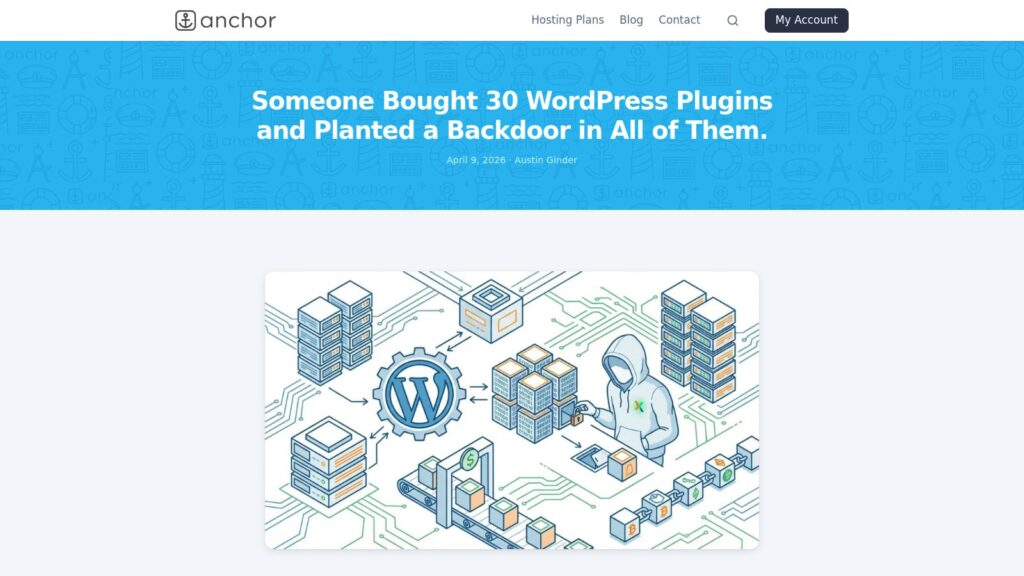
Someone Bought 30 WordPress Plugins and Planted a Backdoor in All of Them.

A newly acquired portfolio of over 30 popular WordPress plugins was found to contain a sophisticated backdoor planted by the buyer eight months before activation, enabling unauthorized access, SEO spam injection, and evasion of traditional domain takedowns by resolving command-and-control domains via Ethereum smart contracts. After discovery, WordPress.org immediately removed all affected plugins, and patched versions with the malicious module removed have been released to mitigate the widespread threat from hundreds of thousands of compromised sites. This incident highlights significant trust and security vulnerabilities in the WordPress plugin marketplace, particularly the lack of oversight around plugin ownership changes.

https://anchor.host/someone-bought-30-wordpress-plugins-and-planted-a-backdoor-in-all-of-them/

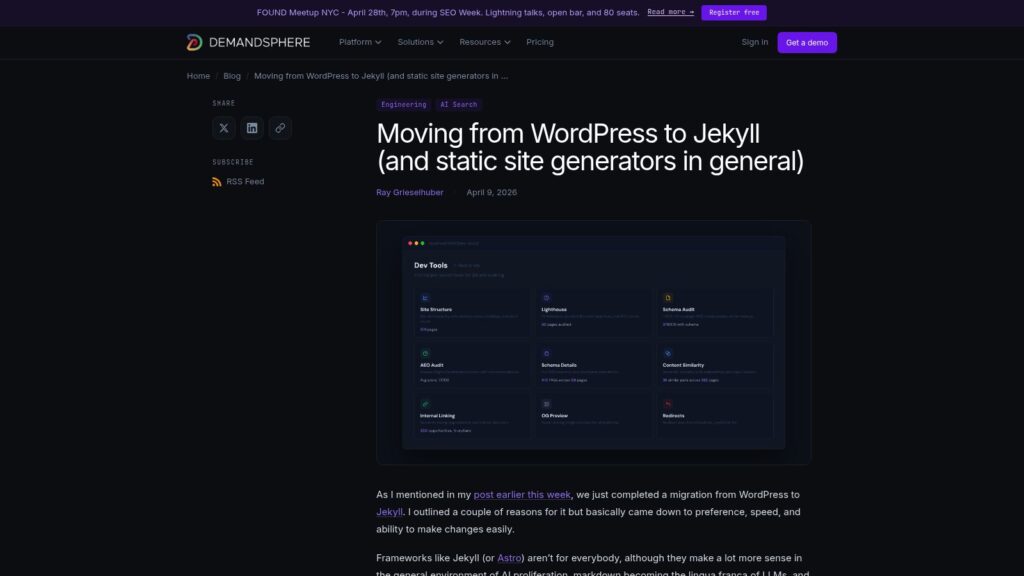
Moving From WordPress to Jekyll (and Static Site Generators in General)

DemandSphere completed a migration from WordPress to the static site generator Jekyll to improve site speed, flexibility, and development efficiency, leveraging AI tools like Claude Code to assist with the process. The migration involved transferring 288 blog posts, implementing advanced SEO architecture including JSON-LD schema and environment-aware configurations, building custom development tools for site auditing, and enabling client-side search without external dependencies, resulting in a faster, more manageable site better suited for rapid content updates.

https://www.demandsphere.com/blog/rebuilding-demandsphere-with-jekyll-and-claude-code/

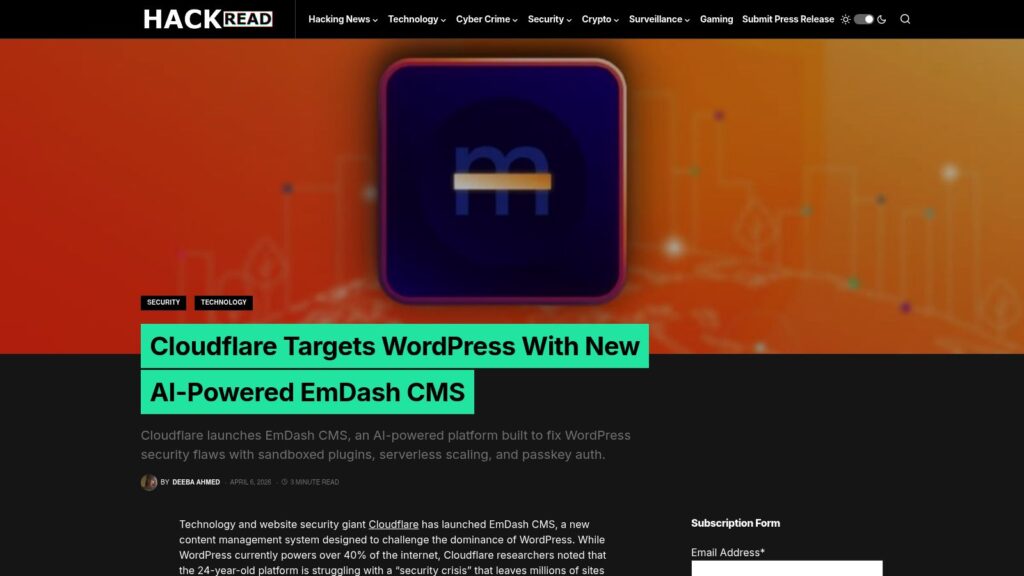
Cloudflare Targets WordPress With New AI-Powered EmDash CMS

Cloudflare has launched EmDash CMS, an AI-powered content management system designed to address WordPress's significant security issues by sandboxing plugins and eliminating password use via passkey authentication. Developed rapidly with AI coding agents and built on modern frameworks, EmDash aims to provide a more secure, scalable, and AI-ready platform, though it faces criticism from WordPress co-founder Matt Mullenweg who favors greater openness and flexibility.

https://hackread.com/cloudflare-wordpress-ai-powered-emdash-cms/

Thoughts on EmDash – Techbros Latest Attempt to Stop Me Making Mortgage Payments

In his April 2026 blog post, Rhys Wynne reviews EmDash, a new CMS touted as a potential WordPress replacement, highlighting its familiar interface and built-in SEO features but expressing concerns about limited plugin expansion, potential Cloudflare lock-in, lack of export functionality, and complex developer documentation. Wynne argues that many issues attributed to WordPress, such as plugin bloat and security, can be addressed within WordPress itself and remains skeptical that EmDash can match WordPress’s extensibility and portability, advising caution before migrating clients to it.

https://www.rhyswynne.co.uk/thoughts-on-emdash-techbros-latest-attempt-to-stop-me-making-mortgage-payments/

The CMS Is Dead. Long Live the CMS.

The article discusses the ongoing debate about the future of content management systems (CMS), especially WordPress, in the age of AI-driven web development. While some advocate abandoning traditional CMS platforms in favor of AI-generated, modern JavaScript frameworks, the author argues that CMSs remain essential, highlighting the challenges of dependency management, vendor lock-in, and preserving long-term site architecture; instead of discarding CMSs, AI should be integrated to enhance them, maintaining their value and adaptability.

https://next.jazzsequence.com/posts/the-cms-is-dead-long-live-the-cms

ProcessWire: An Open Source CMS with a Powerful API

ProcessWire is a free, open-source content management system (CMS) and framework designed for ease of use, flexibility, and scalability. It features a customizable, hierarchical page structure, a powerful API for content management, strong multi-language support, and a secure, modular architecture that allows developers full control over content and design. Trusted for both small and large sites, ProcessWire offers a user-friendly editing experience and an expanding ecosystem of modules and tools.

https://processwire.com/

EmDash Feedback

Matt Mullenweg provides critical feedback on EmDash, a new CMS from Cloudflare presented as a “spiritual successor” to WordPress. He argues EmDash lacks the true spirit of WordPress’s open, democratized publishing and notes its plugin security claims fall short, while recognizing EmDash’s solid engineering and strong Cloudflare integration. Mullenweg emphasizes WordPress’s unique community and open-source ethos, suggesting that true innovation should build on first principles rather than mimic existing approaches.

https://ma.tt/2026/04/emdash-feedback/

Rest Pro Tools

REST Pro Tools is a powerful WordPress plugin designed to give users comprehensive control over the WordPress REST API. Developed by Jeff Starr, it allows one-click disabling of API routes, granular access management based on user roles, customization of REST error messages and headers, addition of custom fields, and IP/user whitelisting, with both a free and an enhanced Pro version offering extensive features for secure and flexible API management.

https://plugin-planet.com/rest-pro-tools/

Scaling the REST API: Defensive Architecture for Custom Endpoints

The article explains how to create high-performance custom WordPress REST API endpoints by designing lean responses using the _fields parameter, avoiding heavy queries like WP_Query when unnecessary, and implementing efficient caching with object caches such as Redis or Memcached. It also emphasizes securing endpoints with proper permission and input validation, plus protecting server resources via network-level defenses like Web Application Firewalls, DDoS protection, and rate limiting at the edge to prevent denial-of-service through excessive API requests.

https://deliciousbrains.com/scaling-the-rest-api/

WordPress Gutenberg 22.7 Lays Groundwork For AI Publishing

WordPress Gutenberg 22.7 improves editing workflow and prepares for AI publishing, introducing features like custom CSS selectors for block developers, live style previews, an admin page for managing AI connectors, and new content guidelines for consistent AI interaction. Additionally, real-time collaboration is now enabled by default.

https://www.searchenginejournal.com/wordpress-gutenberg-22-7-lays-groundwork-for-ai-publishing/569543/

Database Indexing: The Missing Manual for WordPress

The article explains that while WordPress’s default database indexes are adequate for most sites, large sites with millions of rows in tables like wp_postmeta and wp_options suffer from slow queries due to full table scans. It emphasizes understanding MySQL indexing basics, managing the wp_options table size to stay within a 1MB cache buffer, and using partial indexes on large text fields to improve query performance, while recommending tools like Query Monitor and the MySQL Slow Query Log to identify bottlenecks.

https://deliciousbrains.com/database-indexing-for-wordpress/

Scroll to Top