WordPress

BlogBook — WordPress, Micro.blog, or Ghost – Markdown Book
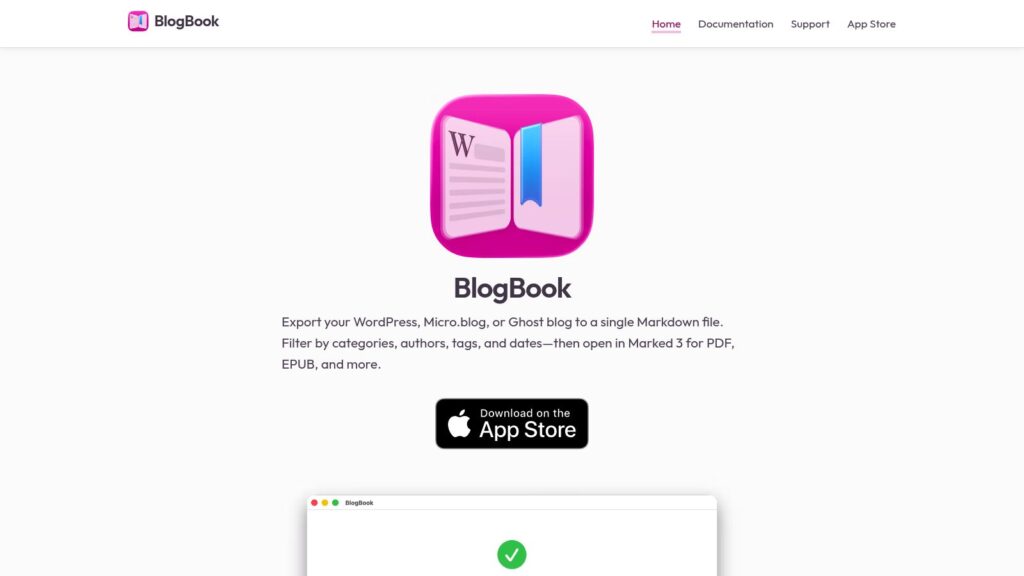
BlogBook is an app that allows users to export their WordPress, Micro.blog, or Ghost blogs into a single Markdown file, with options to filter by categories, authors, tags, and dates. The exported file can then be opened in Marked 3 to generate PDFs, EPUBs, and other formats, facilitating easy backup and content sharing. Developed by Brett Terpstra, BlogBook is available on the Mac App Store.
https://blogbook.my/

Why WordPress Needs to Plug Into the Agentic Web

WordPress must evolve from a static CMS to an agentic platform, enabling AI agents to interact with its content through the Model Context Protocol (MCP). MCP transforms WordPress by structuring data for AI queries rather than traditional human interfaces. Utilizing tools like the WP Engine AI Toolkit, developers can enhance content query capabilities, ensuring data remains accurate and discoverable. This shift towards an AI-friendly architecture allows WordPress sites to actively engage in the AI ecosystem, making previously unstructured data accessible and agent-operable, thus future-proofing digital strategies.

https://wpengine.com/builders/why-wordpress-needs-to-plug-into-the-agentic-web/?_gl=1*c4klbk*_gcl_au*MjEyNTYzODU3NS4xNzY4OTI3OTcz*_ga*MTAzNDQyNzc3OC4xNzY4OTI3OTcy*_ga_QQ5FN8NX8W*czE3Njg5Mjc5NzMkbzEkZzAkdDE3Njg5MjgwMDIkajMxJGwwJGgxNjM4MzY5MTc0

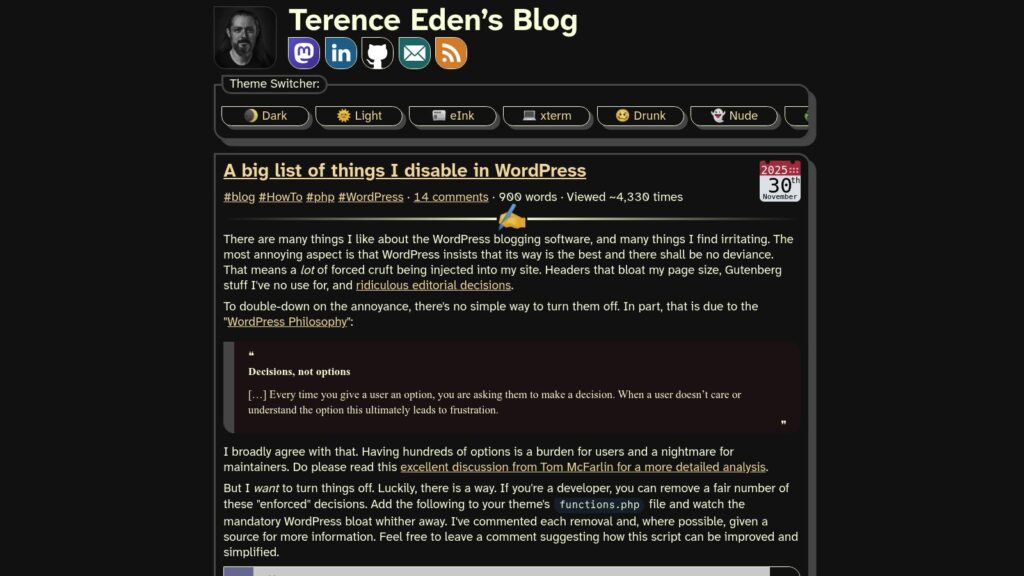
A Big List of Things I Disable in WordPress

Terence Eden shares a comprehensive list of WordPress features and default behaviors he disables to reduce bloat and improve site performance, accompanied by a detailed PHP script to remove unwanted styles, scripts, and automatic formatting. Despite WordPress’s philosophy of “decisions, not options,” Eden provides developer-friendly solutions to override enforced defaults like emoji scripts, Gutenberg styles, automatic formatting, and various metadata injections, aiming to create a cleaner, faster WordPress experience.

https://shkspr.mobi/blog/2025/11/a-big-list-of-things-i-disable-in-wordpress/

Personal Blogs Are Back, Should Niche Blogs Be Next?

The article discusses the revival of personal blogs and suggests that niche blogs—focused, high-quality topic-specific resources—should also make a comeback to provide reliable information amidst the rise of social media and AI-generated content. It highlights the historic value of niche blogging for expertise and income, advocating for independent writers to produce such content with improved monetization approaches, helping to restore a vibrant, trustworthy web environment.

https://disassociated.com/personal-blogs-back-niche-blogs-next/

Delicious Brain Bytes: WordPress 6.9 RC1, FAIR’s Security MVP, and Finding Hidden Gems

The article highlights key developments in the WordPress ecosystem including the release candidate for WordPress 6.9, which introduces the new Abilities API that standardizes plugin functionality for better AI integration. It also covers innovations like the Hidden Gems plugin for discovering quality lesser-known plugins, and a collaborative security MVP by FAIR and Patchstack to enhance WordPress security through vulnerability labeling. Additionally, it previews advanced custom block features in ACF and offers significant discounts on popular developer tools for WordPress.

https://deliciousbrains.com/delicious-brain-bytes-wordpress-6-9-rc1-fairs-security-mvp-and-finding-hidden-gems/

I Turned My WordPress Site Into a Mobile App — Here’s What I Learned

The article details the author's experience of turning a WordPress community website into a mobile app using the BuddyBoss App, highlighting its ease of setup, rich features like push notifications and instant messaging, and the significant engagement boost achieved. It provides a step-by-step guide on configuring the app, including connecting the WordPress site, setting up Apple Developer and Google Play accounts, and managing app store submissions, emphasizing BuddyBoss as a beginner-friendly solution for creating native iOS and Android apps without coding.

https://www.wpbeginner.com/wp-tutorials/turn-wordpress-site-into-an-app/

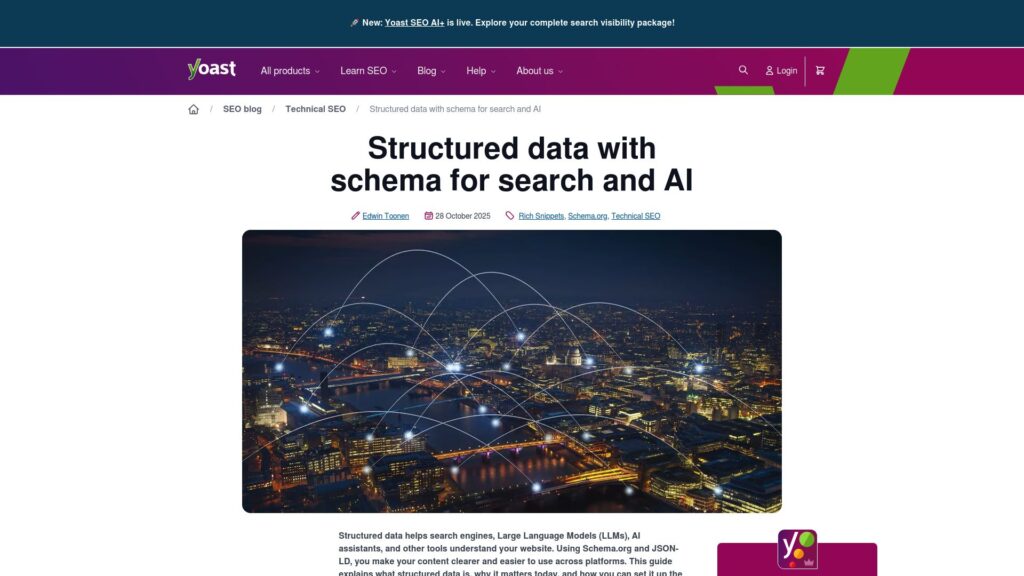
Structured Data With Schema for Search and AI

Extreme TLDR: Structured data enhances search visibility by helping search engines and AI understand your content. Using Schema.org and JSON-LD, it improves clarity and eligibility for rich results, which can lead to better click-through rates. Key structured data types include Article, Product, Event, and Recipe. Yoast SEO simplifies implementation and keeps your schema updated for SEO advancements.

https://yoast.com/structured-data-schema-ultimate-guide/

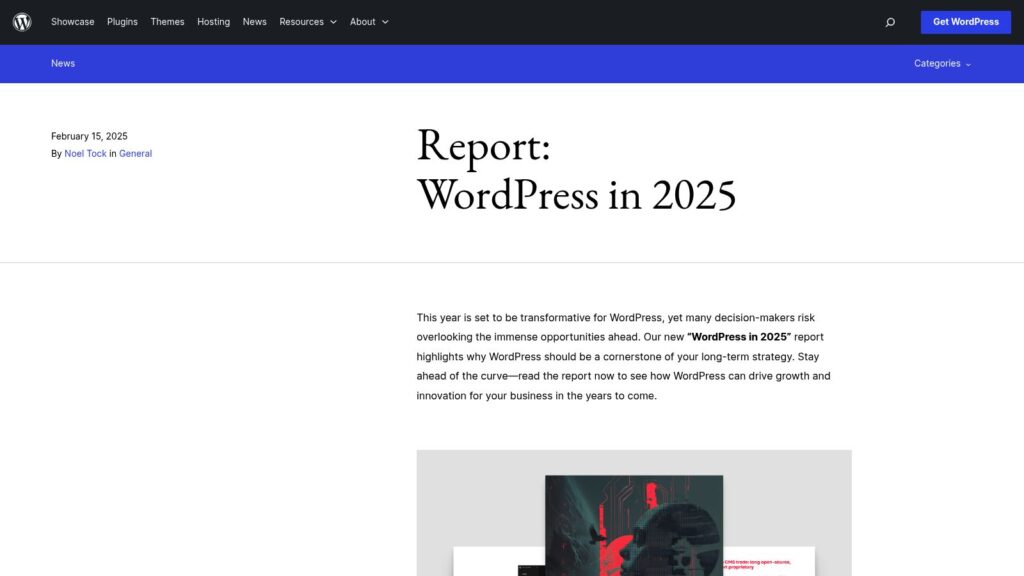
Report: WordPress in 2025

The “WordPress in 2025” report highlights the platform's growing significance as an open-source CMS poised for innovation and enterprise adoption, especially as proprietary CMS interest wanes. Key developments include significant enhancements to the Block Editor with over 34,000 commits, the introduction of Full Site Editing for no-code site building, and opportunities in AI-driven content systems, positioning WordPress as a pivotal tool for future growth and digital strategies.

https://wordpress.org/news/2025/02/wordpress-in-2025-report/

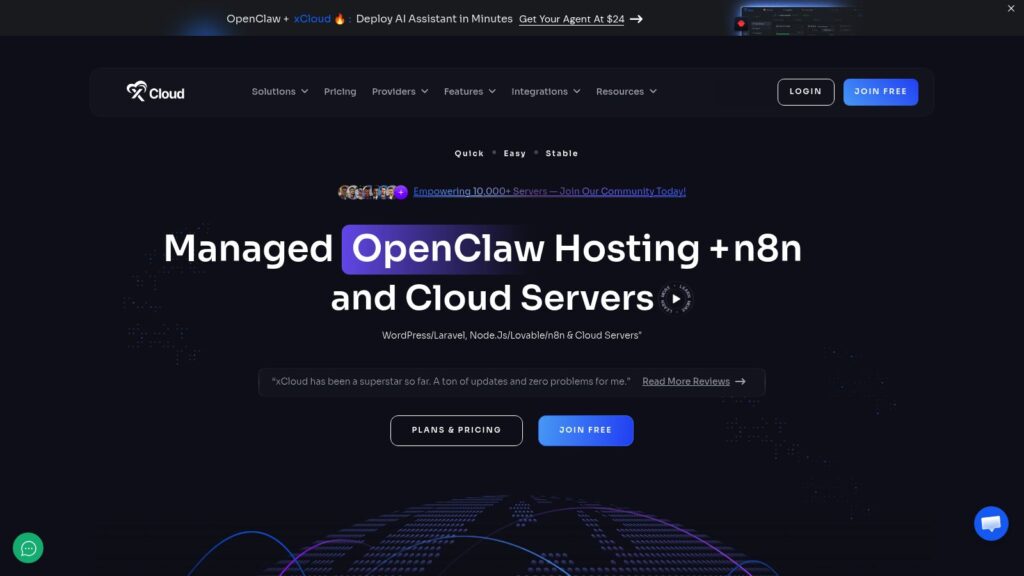
xCloud- Next-Gen Managed Hosting & Server Management for WordPress, Laravel & PHP Applications

xCloud offers a comprehensive, user-friendly cloud hosting platform enabling quick deployment of AI assistants with its managed OpenClaw hosting, along with support for WordPress, Laravel, Node.js, and other applications. It features one-click server deployments, automated updates, backups, security measures, and team collaboration tools, backed by global server coverage and high-performance infrastructure designed for stability, speed, and scalability. Pricing plans range from entry-level to premium, supporting both personal and enterprise needs with root access and a wide array of integrations and automation capabilities.

https://xcloud.host/

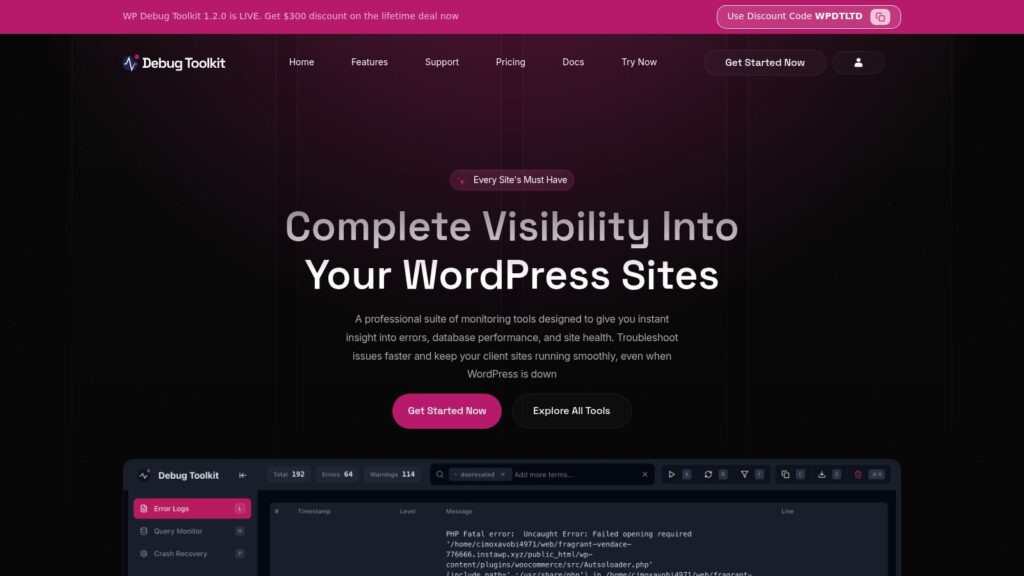
Home

WP Debug Toolkit 1.2.0 is now live, offering a professional suite of tools for WordPress site monitoring, error logging, database performance, and site health, designed to help developers and agencies troubleshoot issues quickly and efficiently. The toolkit includes three main components—Error Log Viewer, Query Viewer, and Site Monitor—providing real-time insights even during site crashes, with features like crash recovery, slow query detection, and instant alerts, available through various pricing plans including a lifetime deal with a $300 discount.

https://wpdebugtoolkit.com/

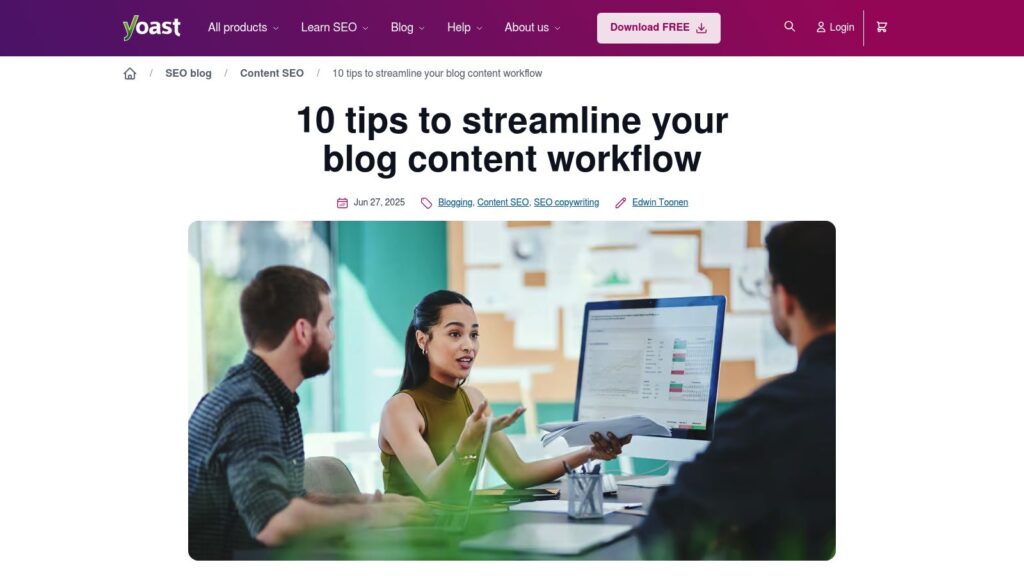
10 Tips to Streamline Your Blog Content Workflow

The article “10 tips to streamline your blog content workflow” by Yoast provides practical advice for improving digital content production, especially when working with a team. It emphasizes setting clear goals, defining roles, visualizing workflows, setting deadlines, and maintaining flexibility to reduce stress and increase efficiency in content creation processes.

https://yoast.com/streamline-digital-content-workflow/

Debunking WordPress Security Myths: What Developers Often Miss

The article debunks common WordPress security myths, emphasizing that the WordPress core is generally secure due to its open-source model, dedicated security team, and rapid updates, while real vulnerabilities often arise from outdated plugins, poor user practices, and improper hosting. It also highlights that security through obscurity, reliance solely on security plugins, or thinking small sites aren’t targets are ineffective approaches; instead, a multi-layered security strategy—including strong authentication, proper configuration, updated software, secure hosting, and informed management—is essential for protecting WordPress sites.

https://deliciousbrains.com/debunking-wordpress-security-myths-what-developers-often-miss/

The History of WordPress: From 2003 to Today

WordPress, now the most popular content management system powering over 43% of websites, began as a fork of the blogging platform b2 in 2003. Founded by Matt Mullenweg and Mike Little, it rapidly evolved through key milestones like the introduction of plugins, themes, and a robust community infrastructure, supported by Automattic and the WordPress Foundation, driving its growth from a simple blogging tool to a versatile platform for building all types of websites.

https://webdesign.tutsplus.com/the-history-of-wordpress–cms-109137a

Pingdom Tools

Pingdom provides website uptime and performance monitoring services, using over 70 global polling locations to test and verify websites continuously. Their tools help analyze website load speed, identify bottlenecks, and improve the end-user experience through features like synthetic monitoring, real user monitoring, and alerting.

https://tools.pingdom.com/

Top Features to Look for in a WordPress Directory Plugin – Noupe

The article outlines essential features to consider when selecting a WordPress directory plugin, emphasizing its role in creating fast, scalable, and monetizable directories for various niches like business listings or classified ads. Key features include advanced search filters, mobile app support, customizable fields, payment gateway integration, SEO optimization, and user review systems, all aimed at enhancing user experience, administrative efficiency, and revenue potential.

https://www.noupe.com/business-online/wordpress-directory-plugin-features.html

Scroll to Top